
April 21, 2026
Co-Developed by Plus W × TFHD digital: Custom-Made, Results-Driven Training
— A DX Program Case Study at Tokyu Fudosan Holdings —
Tokyu Fudosan Holdings Corporation is placing strong emphasis on developing “bridge persons” in order to accelerate DX across the group.
DX only begins to move when both “business knowledge” and “creating business processes that leverage digital technology” come together. This trainee program was developed to cultivate “bridge persons” who serve as a bridge between business and digital technology.
This time, Plus W co-developed—together with Tokyu Fudosan Holdings Corporation (Headquarters: Shibuya-ku, Tokyo; President & CEO: Hironori Nishikawa; hereinafter “Tokyu Fudosan Holdings”) and its DX function company TFHD digital Inc. (Headquarters: Shibuya-ku, Tokyo; Representative Director: Takayuki Kanehisa; hereinafter “TFHD digital”)—a program for building the knowledge and ways of thinking required by the project managers (hereinafter “PMs”) who drive projects forward. Rather than a lecture format centered on classroom study, it was designed as a “hyper-practical” active-learning program using real projects as material.
For details on this initiative and TFHD digital’s summary of it, please also see the following press release.
https://prtimes.jp/main/html/rd/p/000000032.000072246.html
The participants were four members from three companies—Tokyu Resort, Tokyu Housing Lease, and eWeL. We spoke in detail with these participants, who differ in job type and experience, about how they felt taking the program and how they are applying it in their work.
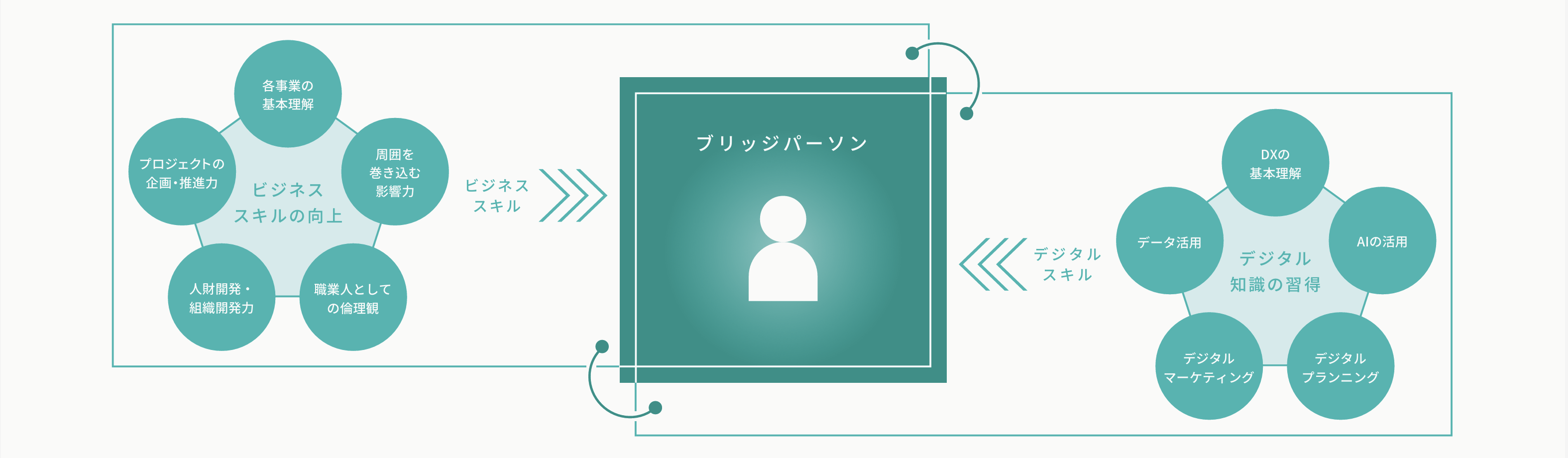
Bridge persons connecting business and digital
Overview of the Trainee Program
Program objective: To develop talent that enhances the DX-promotion capability of Tokyu Fudosan Holdings as a whole.
Background: As each group company advanced system development, challenges in driving projects—particularly in large-scale projects—were becoming apparent. Because developing talent who can organize these issues and drive projects toward their goals was an urgent priority, the program was developed.
This program was co-developed through collaboration among Tokyu Fudosan Holdings, TFHD digital, and Plus W. Plus W was responsible for running the program.
Schedule: June to August 2025 (once a week, 10 sessions in total)
Program themes:
Session 1: “The role of project management”
Session 2: “Objective setting, current-state analysis, and requirements definition”
Session 3: “Practicing the creation of a requirements definition document”
Session 4: “Fundamental knowledge related to system development”
Session 5: “Vendor / service selection”
Session 6: “Kickoff preparation: drafting the project plan”
Session 7: “Overview of system development and project management”
Session 8: “Drafting post-release feature-expansion and operation plans”
Session 9: “Individual consultations / sparring with the instructor”
Session 10: “Project plan presentation and discussion”
Participant Profiles
Yumiko Ouchi
Tokyu Resort Corp. — CRM Planning Group, CRM Planning Department, Marketing Division
Ayako Tsutsui
Tokyu Resort Corp. — CRM Planning Group, CRM Planning Department, Marketing Division
Shuji Arakawa
Tokyu Housing Lease Corp. — Tokyu Company Housing Management, Business Management Division, General Management Group, and Core Systems Group, DX Promotion Department
Daichi Kino
eWeL Inc. — Project Promotion Group 1, Project Promotion Department, Healthcare Development Division
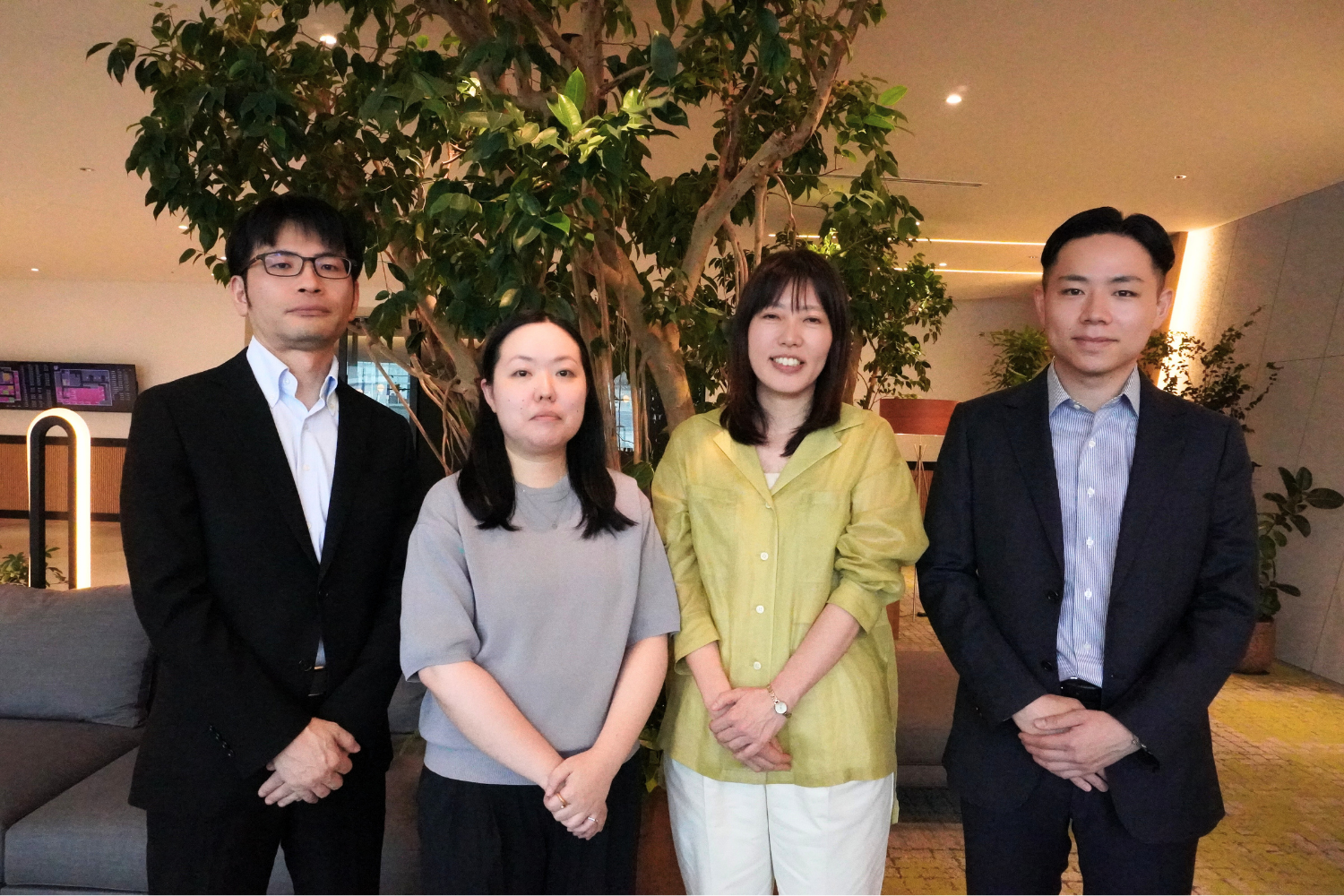
From left: Mr. Arakawa (Tokyu Housing Lease); Ms. Tsutsui and Ms. Ouchi (Tokyu Resort); Mr. Kino (eWeL)
Volunteering, a manager’s recommendation…
Four people from three companies across different businesses and roles join the learning space
Q: Please tell us how each of you came to join the program.
Mr. Arakawa (Tokyu Housing Lease)
It started when someone in our DX Promotion Department’s internal chat asked, “Would anyone like to go?” My work involves the development, maintenance, and operation of core systems, so I felt the program content was directly connected to my work and raised my hand.
Mr. Kino (eWeL)
Because I was nominated by an executive officer, I had assumed the program would be for “beginners” like myself. When I met everyone on the first day, I remember feeling a bit anxious about the difference in our careers.
Ms. Tsutsui (Tokyu Resort)
In our case, we had a project we were driving internally, and when we consulted TFHD digital about it, they introduced us to this program. Since it was just as the project was getting started, we discussed internally that it would be good timing to take the program and decided to enroll.
Ms. Ouchi (Tokyu Resort)
Actually, there was a bit of a misunderstanding—we thought it was a program just for us. Then Mr. Arakawa and Mr. Kino showed up (laughs). In the end, having four people from three companies across different businesses and roles learn together made it a deep learning experience.
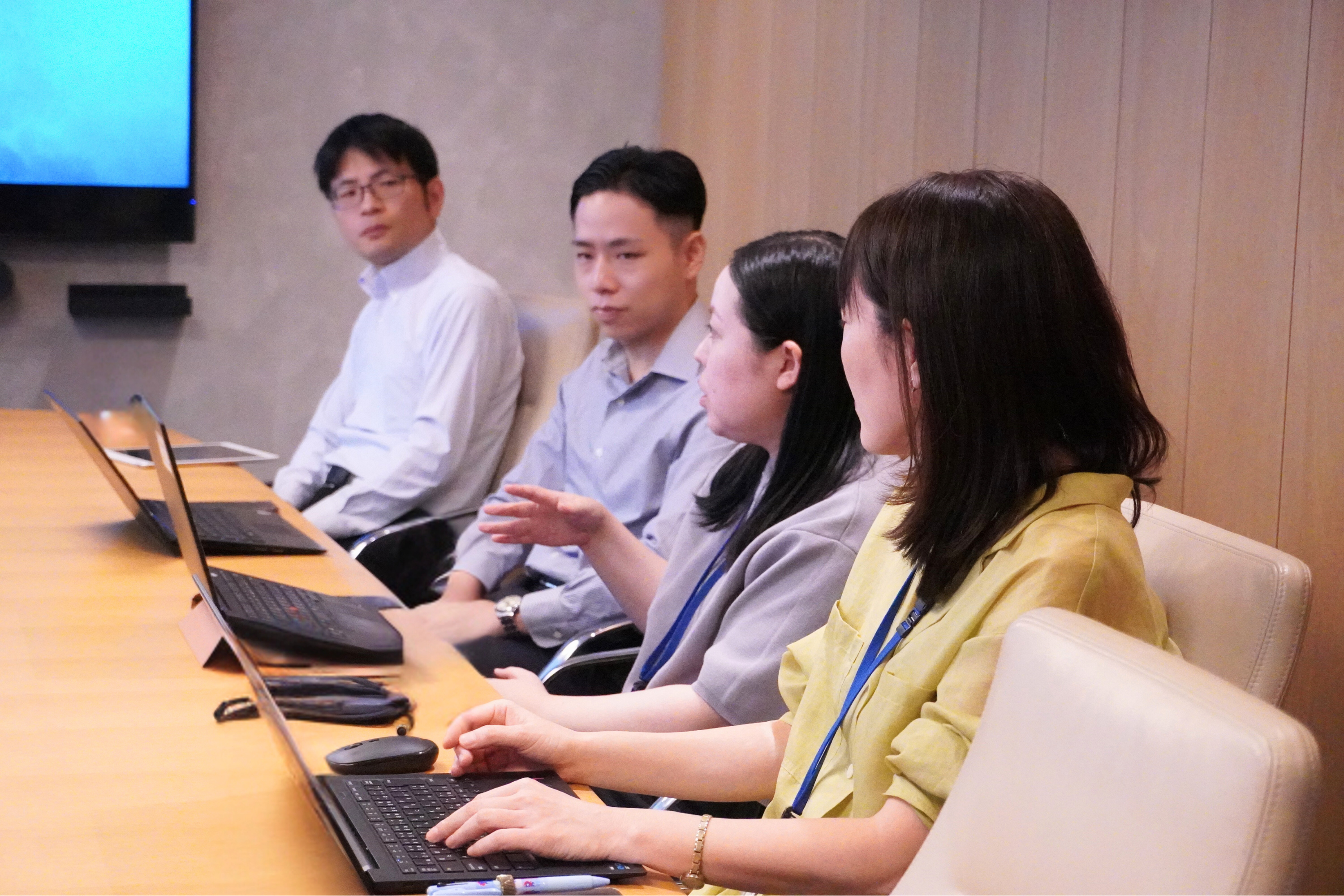
Ms. Ouchi of Tokyu Resort, who says having participants from different businesses and roles led to deeper learning
The program became a “pacemaker” for the real project
Q: Wasn’t it hard to take a 10-session program once a week? How did you maintain your motivation?
Ms. Tsutsui (Tokyu Resort)
For us, the weekly program was the ideal “pacemaker” for advancing the actual project. For example, it kept pushing the project along—“If the program has come this far, then the project needs to be this far along too.” If we hadn’t taken it, I think our discussions would have stalled, unsure of what to do.
Mr. Arakawa (Tokyu Housing Lease)
What helped me stay motivated was sharing program reports internally. I would summarize what I learned in a report and share it internally a week later. Part of the reason I started sharing was my own belief that “output is the most effective way to retain knowledge.” The program covered not only the logic of project management but also a lot about mindset, so the reports were very well received on the ground.
Mr. Kino (eWeL)
I sometimes struggled with the weekly homework, but my motivation never swung up or down dramatically. I decided to take away at least one or two learnings from each session, and to help the knowledge stick, I made a point of writing down the important things.
Ms. Ouchi (Tokyu Resort)
Mr. Kino’s efforts were a stimulus for me, too. Despite our differences in career, when it comes to systems experience I’m a “beginner” as well. The other participants’ questions were sometimes helpful references, and I attended each session thinking, “What would I do?”
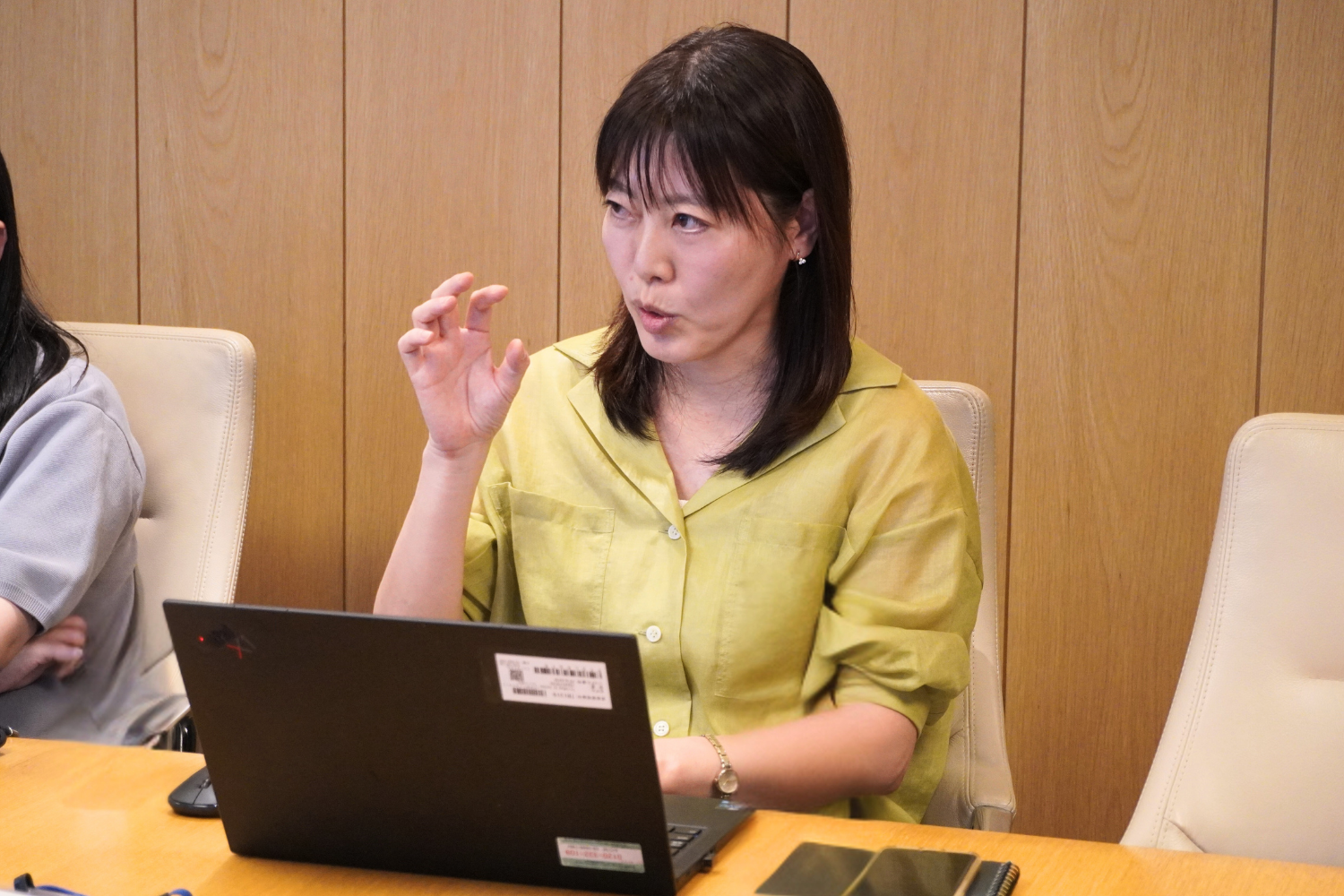
Ms. Tsutsui of Tokyu Resort sharing an episode about asking the instructor a question
Q: Like Ms. Ouchi, were there times you were inspired by other participants?
Mr. Arakawa (Tokyu Housing Lease)
I was truly grateful that Ms. Tsutsui put into words the things I’d been vaguely uneasy about and asked the instructor. I was nodding so hard at her questions I thought my head might fall off.
Ms. Tsutsui (Tokyu Resort)
Ah, that happened (laughs). Mr. Arakawa was nodding so much that I couldn’t help saying, “You’re nodding too much!” I believe it was during the talk about risk, wasn’t it?
Mr. Arakawa (Tokyu Housing Lease)
Yes. It was about how “projects also carry risks, so let’s define the risks and prepare for them in advance.” It was something I’d been thinking about constantly in my work, so I was surprised—and honestly delighted—that someone else was thinking the same thing.
Ms. Tsutsui (Tokyu Resort)
In an operating company, the number of people in PM-like positions is limited, and there are almost no chances to share such concerns internally. I was glad Mr. Arakawa had the same concern, and I felt grateful that there was a place where we could share them.
Mr. Kino (eWeL)
What stayed with me was a proverb Mr. Arakawa quoted in his program presentation: “If you want to go fast, go alone; if you want to go far, go together.” I actually use it on the ground when making decisions—“I want to get this done quickly, so I’ll do it alone,” or “This is difficult, so let’s think about it together.”
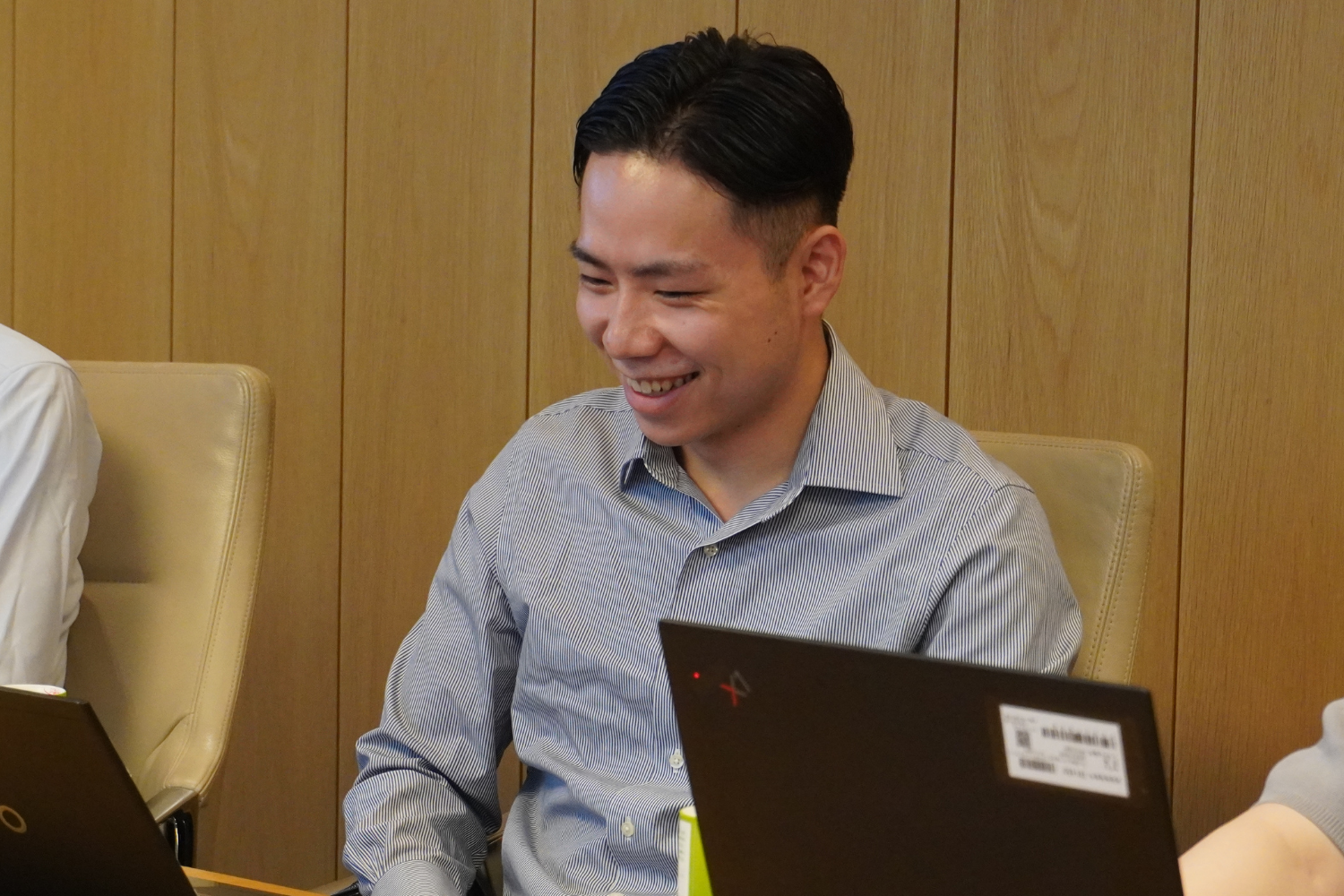
Mr. Kino of eWeL, who says a proverb another participant presented is still a decision-making axis for him
Areas once thought to “depend on experience” were also part of the program
Q: What was the biggest learning from the program?
Ms. Ouchi (Tokyu Resort)
The framework introduced in the program for organizing project objectives and the like was very helpful. Because this framework is highly versatile, I’d recommend it to people in non-system roles as well.
In an exercise using the framework, all four of us gave different answers, which showed that even with the same tool, there are countless ways of thinking.
Mr. Kino (eWeL)
For me, the learning was becoming able to connect PM with my own work. There are many books that introduce PM theory and techniques. But no matter which I read, they felt like “armchair theory.” In this program, however, they also touched on specific numbers, so I could truly internalize it as my own.
Ms. Tsutsui (Tokyu Resort)
Taking the program helped me organize when and what to do in PM work, and I could label each task. It felt like checking the answers to the work I had been doing. Going a step further, I even deliberately put into words things I had been doing intuitively. Then I found that the meaning each person had taken from them differed slightly. Discoveries like this were possible thanks to what I learned in the program.
Mr. Arakawa (Tokyu Housing Lease)
Beyond theory, having them think together with us about communication and human relationships was a major learning.
Even when things are fine in theory, corporate culture and human relationships often affect a project. I had thought it would be difficult to be taught about such interpersonal aspects by someone else. But the program touched on communication as well. Having them share cases—“This kind of thing happens a lot, doesn’t it?”—and think through them together was a huge benefit of joining.
The session that taught me the most was the one on design thinking. They distilled “how to relate to people” into the keyword “design thinking.” It was a great example of how, even for things I had done intuitively, translating them into keywords makes them easier to tackle as tasks.
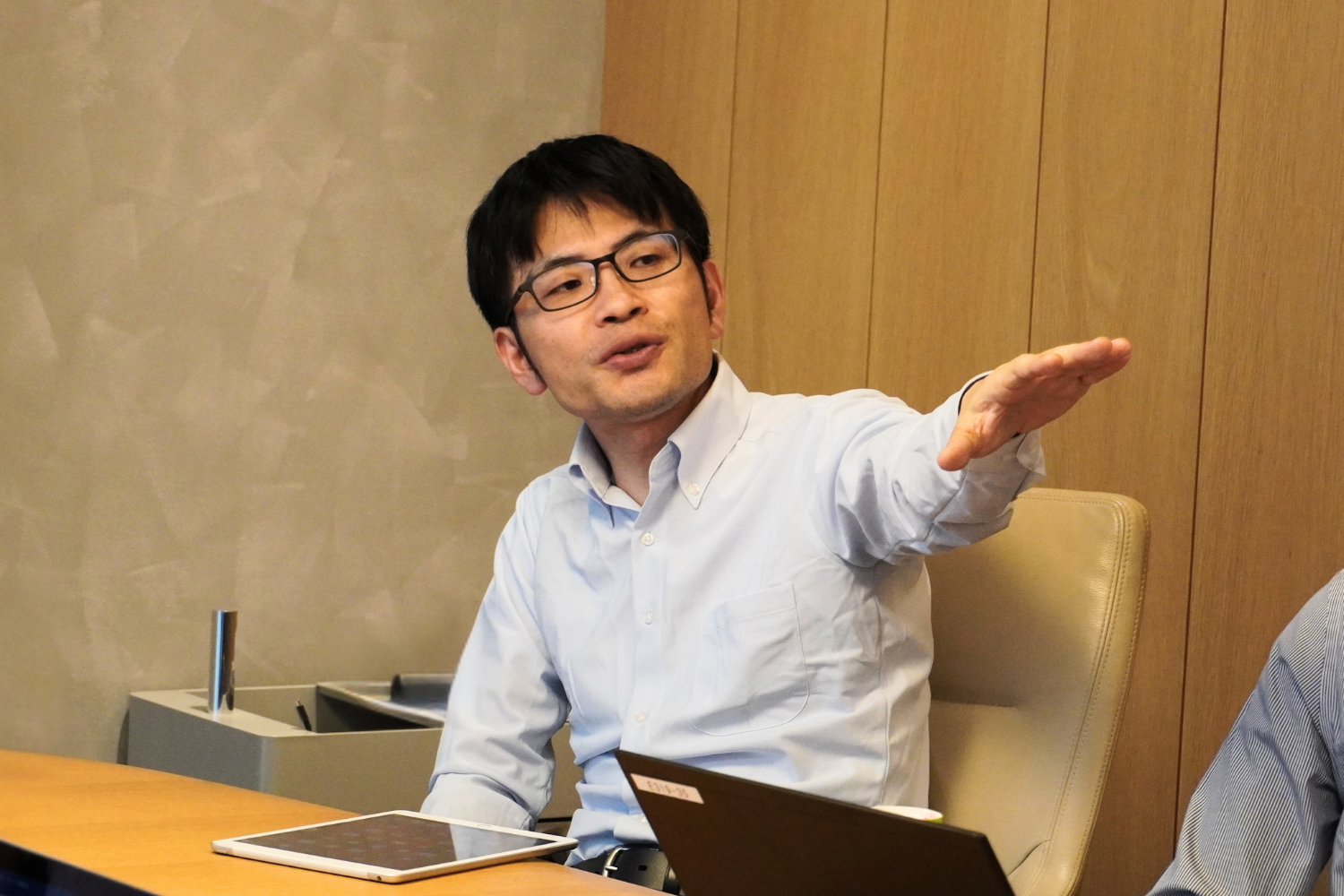
Mr. Arakawa of Tokyu Housing Lease reflecting on human relationships and communication in driving a project
Acquiring a “common language” that changes the organization
Q: Please tell us about the concrete results of taking the program.
Ms. Ouchi (Tokyu Resort)
The project plan we created in the program is being used in creating the RFP (Request for Proposal) for the actual project. Without the program, we might not have gotten this far. We have another project we need to advance, so I want to move it forward in our own way using the frameworks and project plan.
Ms. Tsutsui (Tokyu Resort)
For Ms. Ouchi and me, the progress of the actual project has become the program’s results in itself.
Mr. Kino (eWeL)
The content on “ends and means” that I learned anew in the program is something I apply in my work too. For example, in internal meetings I’ll ask, “What was the objective of this plan again?” When I can talk with an understanding of PM in exchanges with other departments as well, the speed of driving work improves and the plans themselves get better.
Mr. Arakawa (Tokyu Housing Lease)
In my case, being able to hold a study session for my own company’s business division was a result of the program. People tend to lose interest in DX, thinking, “That’s a systems thing,” but the very purpose of DX is business improvement, so it concerns everyone.
That said, most people ask, “What even is a project?” or “I don’t know where to start,” so in the study session I began with the very definition of a project. I avoided jargon and focused on the importance of “objectives,” and it was very well received.
I’d be happy if “ends and means are different” started to be heard in everyday conversations within the company.
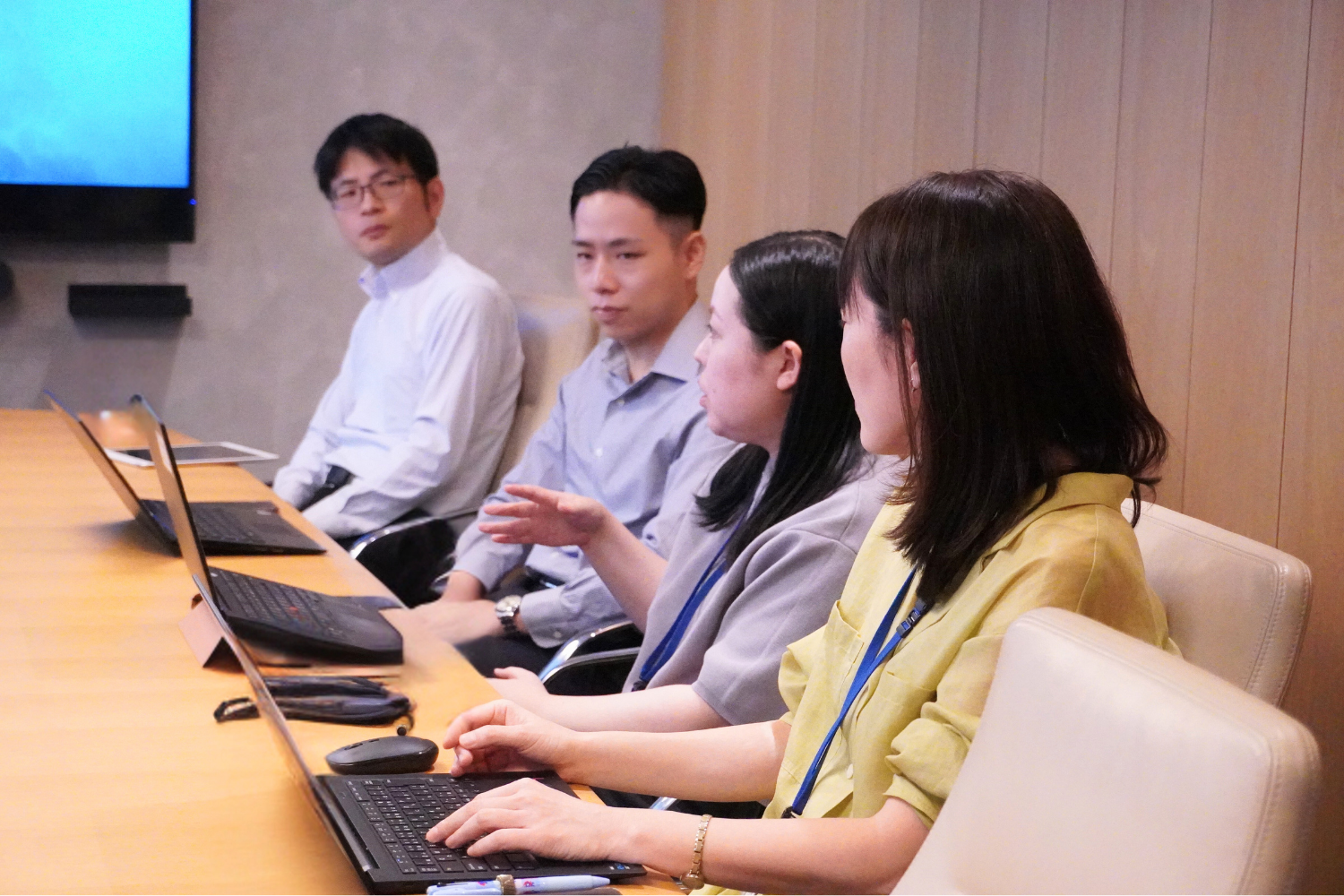
Each member sharing the results after the program
Surprised by the attentive feedback.
Hoping for richer content to measure proficiency
Q: How were the instructors and the program content?
Ms. Ouchi (Tokyu Resort)
Having finished all 10 sessions, one thing I feel is that I wish we had learned to create the project plan at an earlier stage. In this program it was placed in the latter half, so I imagine covering it in the first half as well.
The reason I feel this way is that I actually stumbled while creating the RFP myself, and I keenly realized I had only “thought I understood” during the sessions. When you create it yourself, the resolution of your understanding rises, so I think it would be good to touch on it a bit in the first half of the program.
Ms. Tsutsui (Tokyu Resort)
The instructors were very easy to understand overall. If I had to say, it would have been even better to have content for gauging one’s own proficiency. As Ms. Ouchi said, when you listen to the lectures, you end up “thinking you understand.” So if there were something like a comprehension test, you could objectively judge whether you truly understand, and I think the learning effect would increase.
Mr. Kino (eWeL)
I was surprised at how carefully the instructor commented on the homework. The content was easy to understand, too.
If I could make one suggestion, I’d be glad to have a bit more detailed preview before each session. Being able to prepare for the next session would have deepened my understanding even more.
Mr. Arakawa (Tokyu Housing Lease)
It might have been good to have sessions centered on workshops—for example, setting up a hypothetical project and having the four of us work on it. When each person uses their own project as the material, excuses like “in our case it’s like this” can creep in. In the sense of being grounded in real work, that’s meaningful, but if we could have debated using the same setup, I think it would have led to a fairer exchange of opinions.
Each member reflecting on the homework and the instructor’s feedback
We especially want non-IT departments—who know the “challenges” best—to take it
Q: What kind of people would you recommend this program to?
Mr. Arakawa (Tokyu Housing Lease)
I think this program is packed with the essence of getting things done, so I’d recommend it to everyone—not just the systems department but also general administrative departments and beyond. I especially recommend it to those who have given up, thinking, “(My colleagues) won’t cooperate.” If people with high drive, who will carry the company’s future, take it, I think the ripple effect within the company will be even greater.
Mr. Kino (eWeL)
I’d recommend it to people who do planning in their work. It doesn’t have to be the exact same program—a shorter, condensed version would be fine too. As for the right timing to take it, perhaps around one’s third year. I think people who have some work experience would gain a lot.
Ms. Tsutsui (Tokyu Resort)
The people best suited to this program are those who “want to improve their work but don’t know how.” Most business people probably have some kind of challenge. What shows the path to solving that challenge is this program. Since some of this program’s content is highly specialized and difficult, arrangements tailored to the audience may be necessary.
Ms. Ouchi (Tokyu Resort)
Even if you’re not directly involved with systems or IT, I’d like everyone who feels a sense of challenge in their work to take it. The core parts of the program—like how to organize on the ground and the “difference between ends and means”—are worth knowing for anyone. This time, I felt that taking action is the most important thing in driving a project forward. For anyone who thinks “I want to change something” or “I want to take action,” I believe this program can be the trigger.
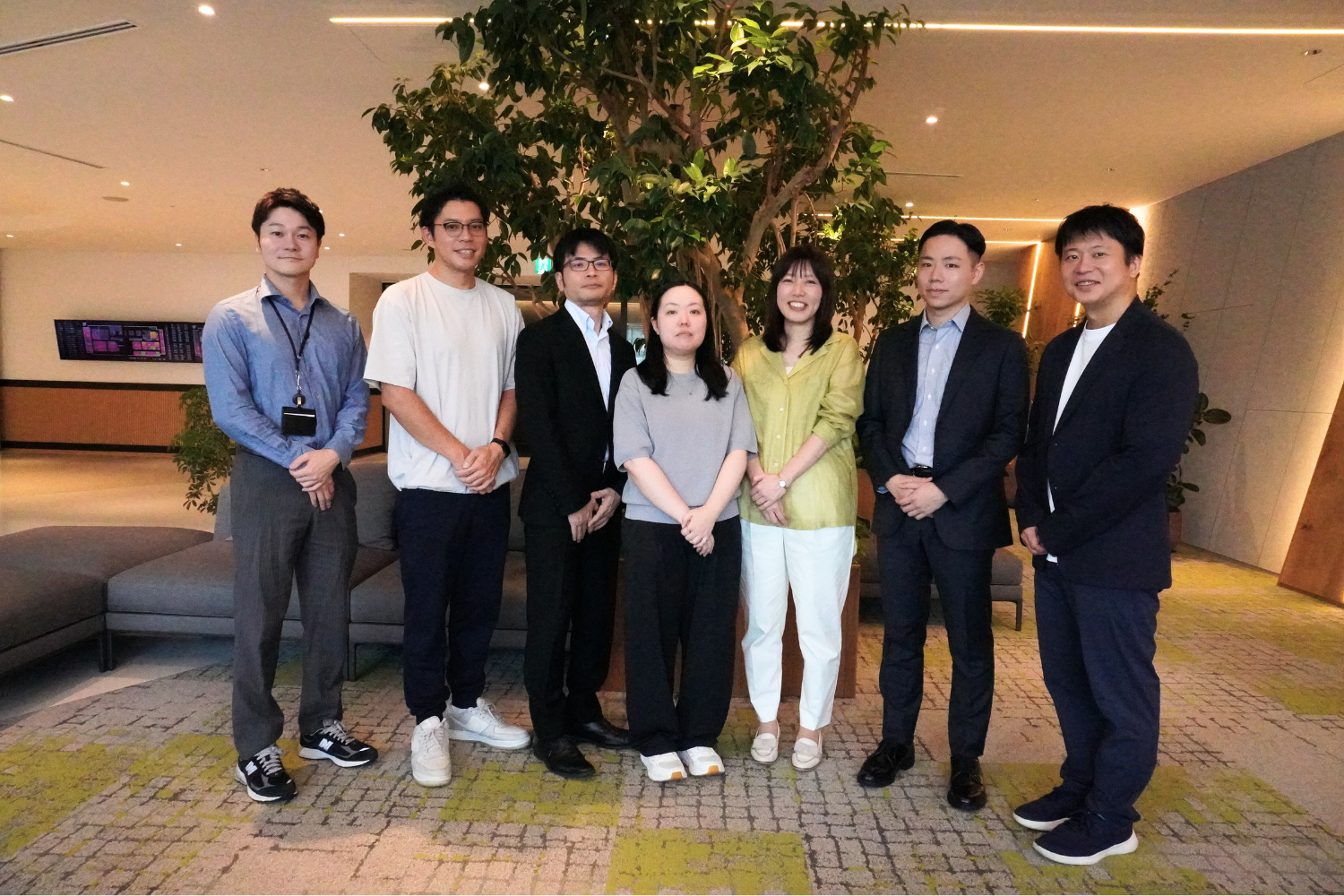
With the four trainees in the center; from left: Mr. Inoue (Tokyu Fudosan HD), Mr. Yasuda (TFHD digital), and Murai (Plus W)
Company Overview
<Tokyu Fudosan Holdings Corporation>
President & CEO: Hiroaki Hoshino
Headquarters: Shibuya Solasta, 1-21-1 Dogenzaka, Shibuya-ku, Tokyo
Established: October 2013
URL: https://www.tokyu-fudosan-hd.co.jp
<TFHD digital Inc.>
Representative Director: Takayuki Kanehisa
Headquarters: Shibuya Solasta, 1-21-1 Dogenzaka, Shibuya-ku, Tokyo
Established: February 2022
URL: https://tfhd-digital.co.jp/
<Plus W Inc.>
President & CEO: Wakako Sakurai
Headquarters: 8th Floor, 25 SY Building, 6-23-2 Jingumae, Shibuya-ku, Tokyo
Established: May 2020
Business: Matching of immediately effective external talent, introduction and dispatch of global talent, IT and offshore development, etc.
URL: https://www.plusw.co.jp/
Plus W’s DX / AI Service Menu
Hands-on training programs
(Frontline professionals serve as instructors, providing practical know-how beyond the textbook and the latest real-world cases)
- Hands-on training in generative AI and data utilization
- Hands-on training in project management
- Hands-on training in data analysis and data strategy
- Agile coaching training
Consulting services
(Supporting management and operational challenges with a right-sized team structure tailored to project characteristics, made up of our members and frontline professionals)
- Support for formulating AI and DX strategy concepts
- PMO support for DX projects
- Digital marketing and social media operation support
- DX support for HR and back-office functions
- RFP creation and vendor selection support
- Support for PoC planning and execution using generative AI
- DX support for advancing talent management